
Hail damage repair
OEM-approved paintless dent repair and traditional methods. Insurance claims handled directly. Your factory finish preserved whenever possible.
Hail Damage in Colorado Springs
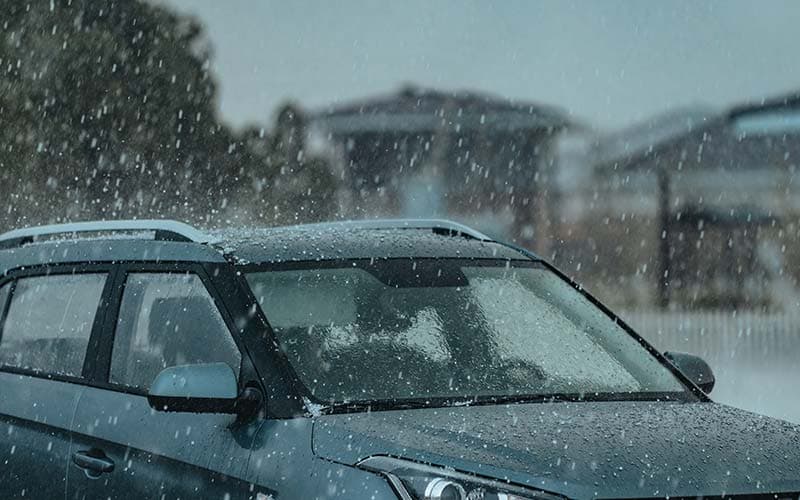
Colorado Springs sits in one of the most active hail corridors in the country. Storms capable of producing golf-ball-size hail move through the region regularly from late spring through early fall. A single storm can leave dozens or hundreds of dents across every horizontal panel on your vehicle: the hood, roof, trunk, and the tops of your fenders and doors.
Phil Long Collision Center repairs hail-damaged vehicles year-round at our Colorado Springs facility. Whether your vehicle took light damage from a brief storm or severe damage from a large storm event, the process starts the same way: a thorough damage assessment under controlled lighting, followed by a written estimate and insurance coordination.
What Happens When You Call
Damage assessment
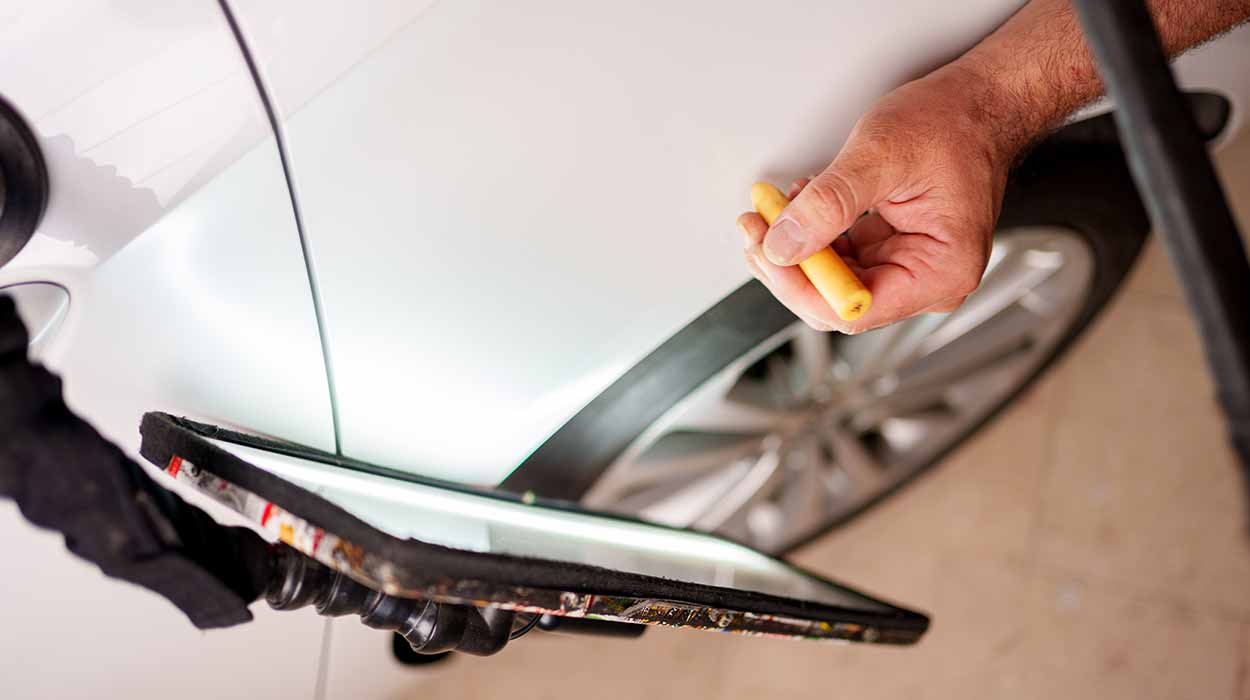
A technician inspects every panel under specialized lighting that reveals dents not visible in normal light. Each dent is catalogued by location, size, and depth. This inventory becomes the basis for the insurance estimate.
Insurance coordination
Hail damage falls under comprehensive coverage, not collision. Phil Long works directly with your insurance adjuster. You are not responsible for negotiating the scope of the estimate. We document every dent and submit the full assessment.
Method selection
PDR is used where the dents are within size limits, the paint is intact, and tool access to the panel is possible. Where PDR is not appropriate, traditional repair and refinish is used. Some vehicles require both methods on different panels.
Repair and verification
Every completed panel is re-inspected under specialized lighting. Remaining surface irregularities that are invisible to the naked eye in normal light are identified and corrected before the vehicle moves to the next stage.
Delivery
You receive a final walkthrough of the repaired vehicle before pickup. If any panels required refinishing, the paint match and finish quality are reviewed with you. Any ADAS systems on the roof or hood that were disturbed during repair are recalibrated.
PDR or Traditional Repair
Paintless dent repair (PDR)
PDR uses precision metal rods and body picks to massage dents back to their original shape from inside the panel, without disturbing the factory paint surface. When the damage qualifies, PDR is the best outcome for your vehicle.
PDR is the preferred method when the damage qualifies because it preserves your factory paint surface. No sanding, no primer, no color-matching risk. The result is indistinguishable from the original panel, and your factory finish remains intact. This matters for resale value and for vehicles under manufacturer warranty.
When traditional repair is required, Phil Long follows OEM refinishing procedures for your specific make and model. A spectrophotometer reads your vehicle’s exact color code and current finish condition before any paint is mixed. The result matches your factory finish in color, gloss, and texture.
Cost and Insurance Coverage
Hail damage is covered under comprehensive auto insurance, not collision coverage. Your out-of-pocket cost is your comprehensive deductible. Beyond that, the repair is paid by your insurer.
If you do not carry comprehensive coverage, or if you prefer not to file a claim, Phil Long will provide a written estimate for out-of-pocket repair. The cost depends on the number of dents, the panels affected, and whether any panels require refinishing.
Phil Long works directly with all major insurance carriers. After your damage assessment, we submit the full dent inventory to your adjuster. If additional damage is discovered during the repair, we supplement the claim on your behalf. You do not need to manage that process.
How Long Does Hail Repair Take?
Timeline depends on how many panels are affected, which repair methods apply, and how busy the facility is during peak hail season. General ranges:
- Light damage, 1 to 2 panels, PDR only: 1 to 2 days
- Moderate damage, multiple panels, PDR only: 3 to 5 days
- Moderate damage with some refinishing required: 5 to 7 days
- Severe storm damage, full vehicle: 1 to 2 weeks
After major storm events, Phil Long coordinates scheduling so every vehicle gets a confirmed appointment. Call when you are ready and we will book the next available slot.
Why Phil Long for Hail Repair
After major hail storms, temporary mobile operators set up in parking lots across Colorado Springs. The work quality varies, and there is no permanent address to return to if a panel needs follow-up. For a vehicle you plan to keep, the long-term outcome depends on accountability as much as technique.
Phil Long is a permanent Colorado Springs facility with a reputation built since 1945. I-CAR (Inter-Industry Conference on Auto Collision Repair) Gold Class certification means our technicians train to current standards for PDR and traditional repair. Manufacturer certifications for eight brands mean the procedures used on your vehicle match what the manufacturer requires, which protects your warranty.
When you bring your vehicle to Phil Long, the damage assessment, insurance coordination, repair, and final inspection all happen under one roof, at a facility that will be here next year if you have a question.
Ready to Repair Your Hail Damage?
Schedule a damage assessment when it works for you. Phil Long handles insurance coordination, PDR, and traditional repair in Colorado Springs.
